




From design to deployment
Telecom infrastructure projects depend on accurate documentation, design updates, and permitting workflows to meet demanding rollout timelines. These processes require consistency, speed, and clear coordination across distributed teams.
Sourcefit provides scalable telecom outsourcing for engineering firms and network providers. We help manage CAD drafting, permit tracking, and data documentation with structured workflows, measurable quality standards, and secure delivery from certified global hubs.





























Reliable and transparent telecom support
We provide flexible telecom infrastructure outsourcing that can scale from individual specialists to dedicated project teams. Structured onboarding, clear technical guidelines, and defined QA processes maintain accuracy, turnaround consistency, and compliance. Client success managers and account oversight keep projects aligned and performance measurable.
Our secure delivery centers and disciplined workflows protect client data and network documentation. With 17 years of outsourcing experience and teams in the Philippines and the Dominican Republic, Sourcefit provides telecom infrastructure outsourcing that is scalable, compliant, and trusted worldwide.




Telecom infrastructure support services we provide

AutoCAD and network drafting
Create and update network layouts, fiber schematics, and infrastructure blueprints.

Permit preparation and documentation
Compile and manage permitting packages for telecom and construction projects.

As-built and redline updates
Revise and validate design changes using field data and engineering inputs.

Data and asset management
Maintain accurate records of network assets, materials, and project versions.

QA and design review
Perform drawing checks and verification to maintain design integrity and compliance.
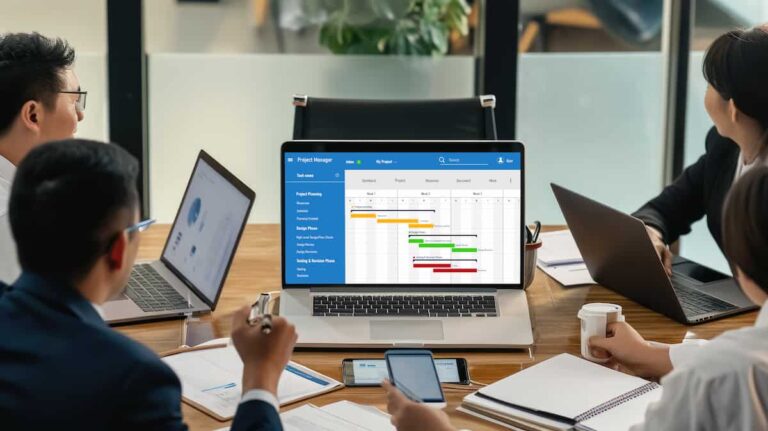
Project coordination and reporting
Track task progress, timelines, and documentation across teams and locations.











Gold Stevie Award winner for AI Innovation (2026) and HR Innovation (2025)


















Why companies choose Sourcefit for telecom infrastructure support
Proven engineering operations expertise
17 years of experience supporting engineering, design, and infrastructure clients worldwide
Structured and measurable QA
Quality metrics for accuracy, compliance, and turnaround consistency
Flexible engagement models
Cost-plus structure with transparent billing and adjustable scale
Secure and compliant delivery
Certified facilities protect network data and documentation
End-to-end project coordination
Teams handle drafting, permitting, and asset documentation with full visibility
Telecom infrastructure support outsourcing pricing
Monthly rate per full-time employee, work from home. Office-based staff add $100 a month.
| Position requirement | Outsourcing |
|---|---|
 Entry |
$1,400 |
|
Mid
|
$1,900 |
|
Senior
|
$2,500 |
Entry: CAD operator, vendor data administrator, accounts payable coordinator. Mid: project coordinator, field support specialist, quality control auditor, finance analyst. Senior: site acquisition specialist, SAQ regulatory compliance specialist, project manager.
Program managers and senior project managers above the senior band are quoted individually.
What the rate includes. Every rate above is all in. It is the employee’s salary and statutory benefits, passed through at cost and itemized on your invoice, plus our flat $395 management fee. The fee covers legal employment and an HR team on the ground, recruitment, an i5 computer with dual monitors and headset, 24/7 IT support and a secure managed network, security certifications and insurance, training and quality, client success management and the Knit workforce platform. There are no setup, recruitment, workstation, exit or team transfer fees. Where the work suits it, output-based pricing is also available, built on the same transparent framework with the unit price calculation shown.
For comparison, a US telecom project coordinator runs around $60,000 to $80,000 a year in base salary before benefits, a site acquisition specialist $70,000 to $95,000 and a telecom project manager $95,000 to $130,000.
See the full rate card | What the management fee covers | Telecommunications industry page | Engineering outsourcing | CAD creation and conversion
Rates reviewed November 2026 by Andy Schachtel, CEO
Frequently asked questions
-
How much does telecom infrastructure support outsourcing cost?
Sourcefit’s telecom infrastructure support rates are $1,400 a month for entry level, $1,900 for mid level and $2,500 for senior telecom program support staff, per full-time employee working from home. Office-based staff add $100 a month. Each rate is all in: salary and benefits at cost plus the $395 management fee. There are no setup, recruitment or exit fees. Where the work suits it, output-based pricing is also available, built on the same transparent framework: we show how the unit price is calculated, so you know exactly what you are paying for.
-
Is the management fee added on top of these rates?
No. The fee is already inside every rate on this page and on every quote. A $1,400 rate is about $1,005 of salary and benefits at cost plus the $395 fee. You will never see the fee added to a rate you were quoted.
-
What is included in the monthly rate?
Legal employment and compliance with an HR team on the ground, recruitment, an i5 computer with dual monitors and headset, a 24/7 IT help desk, a secure managed network, our security certifications and insurance, training and quality, client success management and the Knit workforce platform. For office-based staff it also covers the seat, office network and utilities.
-
How quickly can Sourcefit build a telecom infrastructure support team?
Most telecom infrastructure support roles are recruited, interviewed and onboarded in three to five weeks. Site acquisition and regulatory compliance specialists can take longer. You interview and choose the telecom program support staff.
-
Who manages the team day to day?
That is your choice. Most clients manage the team directly: the telecom program support staff report to your managers and work inside your processes and tools, with Sourcefit handling employment, HR, equipment, IT and quality support behind them. If you would rather not manage day to day, our Sightline model builds an autonomous team with its own Sourcefit team lead and quality layer that delivers against agreed SLAs, while still reporting directly to you and working to your KPIs, not ours. Sightline is quoted separately.
-
Can the team work inside our existing systems?
Yes. Telecom program support staff work in your program, GIS and design tools, such as Sitetracker, Procore, Smartsheet, SAP or Oracle, ArcGIS, AutoCAD, MicroStation, 3-GIS and FiberPlanIT, under your access rules. You keep ownership of every account, and access is revoked the day someone leaves.
-
Is telecom infrastructure support outsourcing secure?
Sourcefit holds ISO 27001:2022 and ISO 27701 certification directly, is PCI DSS validated, has a SOC 2 report, signs HIPAA business associate agreements where needed and operates GDPR-aligned data handling. Home-based staff work on company-managed computers over a VPN with traffic routed through Cloudflare.
-
What happens if we want to bring the team in house?
The team is yours. If you decide to move them to your own entity or take them with you, they go with you. There is no transfer fee, buyout or conversion charge.
-
What telecom infrastructure work can be done offshore, and what needs field presence?
Most of the program office. Project management and coordination, site acquisition and regulatory compliance, zoning and permit tracking, scoping and quality CAD, closeout package audits, field support and dispatch coordination, vendor and material management, fleet administration and project accounting all run offshore. One US telecom network construction group runs a 75-person Sourcefit team across exactly those functions, including six project managers. What needs people on the ground is the ground: walkouts, pole surveys, construction, acceptance testing and meetings with authorities.
-
Can offshore project managers run our site builds and rollouts?
Yes. Offshore project managers and coordinators own site schedules, milestone tracking in your program tools, vendor and crew coordination, change orders, closeout and customer reporting, reporting to your program directors. The construction crews, site owners and carriers deal with a named member of your team. Six of the project managers on the telecom construction account above are Sourcefit employees in the Philippines, alongside thirteen coordinators and project specialists.
-
Can offshore staff handle site acquisition, zoning and regulatory compliance?
Yes, with the authority meetings and signatures kept onshore. Offshore site acquisition and SAQ regulatory compliance specialists prepare lease and license packages, track jurisdictional requirements, compile zoning and permit applications, manage NEPA, FCC and tower compliance documentation and keep the regulatory calendar. Your onshore team attends hearings and signs. The telecom construction account above runs a ten-person site acquisition, zoning and regulatory compliance team this way.
-
How do you assure quality on closeout packages and construction documentation?
With a dedicated quality control function rather than a spot check. QC auditors review closeout packages, photos, test results and as-builts against the carrier’s and your own checklists before submission, log defects back to the crew and track resubmissions, so packages are accepted first time. The account above has thirteen QC auditors and coordinators doing this across its markets. Sourcefit’s training and quality team samples their work as part of the fee.
-
Can offshore drafters produce stamped drawings for permits?
No. Your locally licensed or chartered engineer reviews and signs off, whether that is a state-licensed PE in the US, a registered engineer in Australia (RPEQ in Queensland, or registered under the Victorian and New South Wales schemes) or a chartered engineer in the UK; offshore scoping and CAD staff prepare permit-ready drawings and packages to that engineer’s standards. Our telecom infrastructure operations team for a global network equipment provider works on that basis.
-
What design and drafting work is included, and do the drafters know NESC, GO 95 and make-ready rules?
Scoping CAD, quality CAD, OSP and ISP drafting, fiber route and splice diagrams, permit packages, as-built and redline updates, bills of materials and asset records. Standards are trainable from your design specifications and your reviewing engineer owns the decisions; FTTx and wireless scoping experience varies by candidate and we screen for it. Supply your standards and a reviewing engineer and the drafters are productive in weeks.
-
Which tools can we expect, and who pays for licenses?
Sitetracker, Procore, Smartsheet and your ERP on the program side; AutoCAD, MicroStation and GIS (ArcGIS, QGIS) for drafting, with OSP platforms such as 3-GIS, FiberPlanIT and Bentley a narrower pool. Seats are normally yours, or procured by Sourcefit as a pass-through at cost; candidates are tested with a sample redline or a scheduling scenario before you meet them.
-
Can offshore staff coordinate permits with municipalities, DOTs, railroads and pole owners?
They prepare and track submissions, pole attachment applications, utility coordination and follow-ups, and run the permit log; your onshore staff handle authority meetings and signatures. For a national program the offshore team is usually the one that knows every jurisdiction’s status at any moment.
-
Dedicated offshore team or an engineering services firm?
A firm for turnkey design with engineer sign-off on a defined project. A dedicated team for a running program: continuous site volume, closeout, permitting, vendor management and reporting under your directors, inside your systems, at a fraction of the cost and with the knowledge staying with you. Most large programs use both.
-
Can we get US-hours coverage and overnight turnaround?
Both. Philippine staff work US shifts for project coordination, field support and dispatch, and redlines or closeout packages submitted at the end of a US day return the next morning. Nearshore seats in the Dominican Republic sit in US Eastern time for roles that need live calls with crews and site owners all day; the telecom construction account above runs a mix of both.
-
How is AI changing telecom program support?
Auto-routing and GIS automation speed route generation and takeoffs, and AI is starting to pre-check closeout packages and photos against checklists. The staff validate what the tools produce against field conditions, permits and carrier standards, and the roles shift toward QA, exceptions and coordination. Fewer hours per site means a lower salary line, not a redundant team. WorkingAI, our managed AI service, consults on process optimization for program offices, mapping the site lifecycle from scoping to closeout and identifying where automation fits before you size the team.