




From raw data to intelligence
AI data annotation turns complex, unstructured datasets into model-ready inputs for machine learning and automation. High-quality labeling supports accuracy, speed, and reliability across every stage of model training.
Sourcefit builds scalable data operations with structured workflows, clear quality targets, and full project visibility. Our teams adapt to your platforms, taxonomies, and accuracy goals so data preparation stays consistent as volumes grow.



























Reliable and transparent data annotation support
We provide flexible data annotation support that can scale from individual specialists to full project teams. Structured onboarding, clear annotation guidelines, and measurable quality checks ensure accuracy, throughput, and reliability. Client success managers and account oversight keep operations aligned and performance visible.
Our secure delivery centers and disciplined processes protect client data and intellectual property. With 17 years of outsourcing experience and teams in the Philippines, South Africa, the Dominican Republic and Madagascar, Sourcefit provides data annotation services that are scalable, cost-efficient, and trusted worldwide.





AI data annotation services we provide

Image and video annotation
Object classification, tagging, and segmentation for vision-based AI and autonomous applications
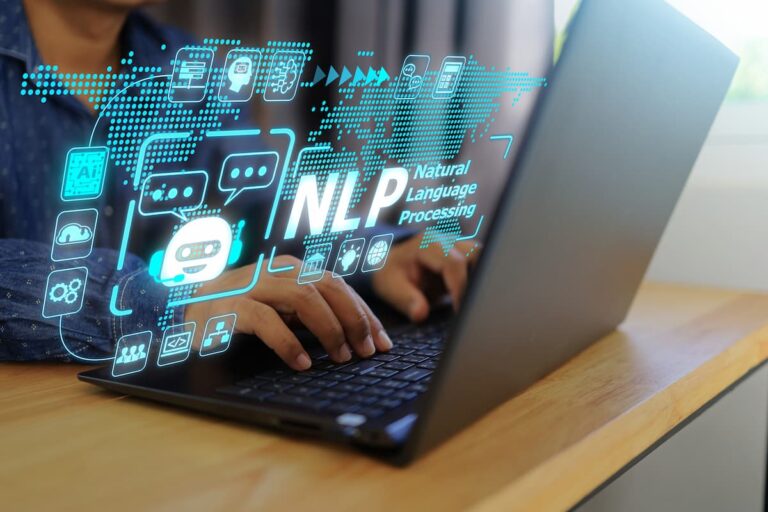
Text and NLP labeling
Entity tagging, intent recognition, and content labeling for natural language processing and LLM training

Audio and speech transcription
Audio segmentation and transcription services that support speech-to-text and conversational AI development

Sensor and LiDAR data processing
3D point cloud annotation and spatial mapping for robotics and mobility projects

Quality assurance and validation
Layered review processes that benchmark accuracy, consistency, and completeness

Workflow management and reporting
Structured reporting and performance tracking to ensure visibility and smooth communication











Gold Stevie Award winner for AI Innovation (2026) and HR Innovation (2025)


















Why companies choose Sourcefit for data annotation
Proven operational experience
17 years supporting data, technology, and customer operations for global clients.
Flexible and transparent delivery model
Cost-plus structure with no setup fees and full project visibility.
Structured quality assurance
Multi-layered QA ensures accuracy and consistency across datasets.
Secure and compliant operations
Certified facilities and strict data governance standards ensure safe handling of sensitive data.
Scalable, tool-agnostic support
Teams work across client platforms, adapting to existing tools, taxonomies, and reporting formats.
AI data annotation outsourcing pricing
Monthly rate per full-time employee, work from home. Office-based staff add $100 a month.
| Position requirement | Outsourcing |
|---|---|
 Entry |
$1,000 |
|
Mid
|
$1,355 |
|
Senior
|
$1,710 |
What the rate includes. Every rate above is all in. It is the employee’s salary and statutory benefits, passed through at cost and itemized on your invoice, plus our flat $395 management fee. The fee covers legal employment and an HR team on the ground, recruitment, an i5 computer with dual monitors and headset, 24/7 IT support and a secure managed network, security certifications and insurance, training and quality, client success management and the Knit workforce platform. There are no setup, recruitment, workstation, exit or team transfer fees. Where the work suits it, output-based pricing is also available, built on the same transparent framework with the unit price calculation shown.
For comparison, a data annotator hired in the US runs $40,000 to $65,000 a year in base salary before benefits.
See the full rate card | What the management fee covers
Rates reviewed November 2026 by Andy Schachtel, CEO
Frequently asked questions
-
How much does AI data annotation outsourcing cost?
Sourcefit’s AI data annotation rates are $1,000 a month for entry level, $1,355 for mid level and $1,710 for senior annotators, per full-time employee working from home. Office-based staff add $100 a month. Each rate is all in: salary and benefits at cost plus the $395 management fee. There are no setup, recruitment or exit fees. Where the work suits it, output-based pricing is also available, built on the same transparent framework: we show how the unit price is calculated, so you know exactly what you are paying for.
-
Is the management fee added on top of these rates?
No. The fee is already inside every rate on this page and on every quote. A $1,000 rate is about $605 of salary and benefits at cost plus the $395 fee. You will never see the fee added to a rate you were quoted.
-
What is included in the monthly rate?
Legal employment and compliance with an HR team on the ground, recruitment, an i5 computer with dual monitors and headset, a 24/7 IT help desk, a secure managed network, our security certifications and insurance, training and quality, client success management and the Knit workforce platform. For office-based staff it also covers the seat, office network and utilities.
-
How quickly can Sourcefit build a AI data annotation team?
Most AI data annotation roles are recruited, interviewed and onboarded in two to four weeks. Domain-specialist annotators, such as medical or legal, can take longer. You interview and choose the annotators.
-
Who manages the team day to day?
That is your choice. Most clients manage the team directly: the annotators report to your managers and work inside your processes and tools, with Sourcefit handling employment, HR, equipment, IT and quality support behind them. If you would rather not manage day to day, our Sightline model builds an autonomous team with its own Sourcefit team lead and quality layer that delivers against agreed SLAs, while still reporting directly to you and working to your KPIs, not ours. Sightline is quoted separately.
-
Can the team work inside our existing systems?
Yes. Annotators work in your labeling platforms and pipelines, such as Label Studio, CVAT, Labelbox, SageMaker Ground Truth or your own tooling, under your access rules. You keep ownership of every account, and access is revoked the day someone leaves.
-
Is AI data annotation outsourcing secure?
Sourcefit holds ISO 27001:2022 and ISO 27701 certification directly, is PCI DSS validated, has a SOC 2 report, signs HIPAA business associate agreements where needed and operates GDPR-aligned data handling. Home-based staff work on company-managed computers over a VPN with traffic routed through Cloudflare.
-
What happens if we want to bring the team in house?
The team is yours. If you decide to move them to your own entity or take them with you, they go with you. There is no transfer fee, buyout or conversion charge.
-
How is data annotation priced: per hour, per label or per dedicated annotator?
Sourcefit’s standard is a dedicated annotator at a flat monthly rate, with salary at cost and the management fee shown separately, which works out far below per-label platform pricing once rework and platform commissions are counted. Output-based pricing per label or per task is available for well-defined, high-volume work, built on a transparent framework with the calculation shown so you can see how the unit price was built.
-
What drives annotation cost?
Data type (3D point clouds and pixel segmentation cost more than image tagging), task complexity, the expertise required (medical or legal annotators earn more than generalists), accuracy requirements that need multiple labelers per item, and rework on rejected batches. Tool seats are normally yours. The management fee is the same for every annotator; the salary line carries the difference.
-
Dedicated annotation team or a crowdsourcing platform?
Crowd platforms give the lowest unit cost and variable quality from rotating workers; consensus checks cannot add domain knowledge. A dedicated team is trained on your guidelines, calibrated continuously, works in secure facilities and produces less rework. Many clients use crowd for simple volume and a dedicated team for anything that touches model quality.
-
Should we keep labeling in house, outsource it, or both?
Keep guideline ownership, edge-case decisions and final QA in house; outsource the volume. Small, highly sensitive datasets may stay internal. The dedicated-team model keeps you in control of both because the annotators are your staff working in your tools.
-
How do you measure labeling accuracy?
Against a gold set you own, with inter-annotator agreement, precision and recall on audited samples, rework rates and how fast guideline changes are applied. QA is multi-stage: independent labeling, adjudication and expert review where the task needs it, not majority voting alone. You audit against your own gold set rather than taking our numbers on trust.
-
Can we run a paid pilot on our own data first?
Yes. A pilot on your actual data, including easy, hard and stress cases, sets the accuracy benchmark and the throughput assumptions before the team scales.
-
What domain expertise do your annotators have?
We recruit to the task: generalists for tagging and transcription, and annotators with relevant credentials for medical, legal, financial, geospatial or audio work. You see candidate profiles and test them on your taxonomy before choosing.
-
Can you work in our tools and deliver in our format?
Yes. Annotators work inside your platform and taxonomy (Label Studio, CVAT, Labelbox, SageMaker Ground Truth or your own tooling) and deliver standards-based exports such as JSON or COCO with annotator-level metadata. No tool migration is required.
-
How do you protect proprietary training data, PII and PHI?
Role-based access to your systems only, company-managed computers over a VPN, ISO 27001:2022 and ISO 27701 controls, GDPR-aligned handling, HIPAA business associate agreements for PHI, and deletion and transfer terms in the contract. Data never leaves your environment.
-
Can the team scale 5x or 10x for a surge, and then scale down?
Yes. New annotators are calibrated against the same gold set before they touch production, so agreement holds as the team grows, and you can scale back without penalty because there is no lock-in.
-
With auto-labeling and synthetic data, do we still need human annotators?
Yes, in the loop. Models pre-label and humans validate, correct and adjudicate; unsupervised AI labeling develops systematic errors that only humans catch. Demand is shifting from simple tagging to judgment-heavy work: edge cases, evaluation sets and preference data. Our teams work AI-assisted queues in your tools.